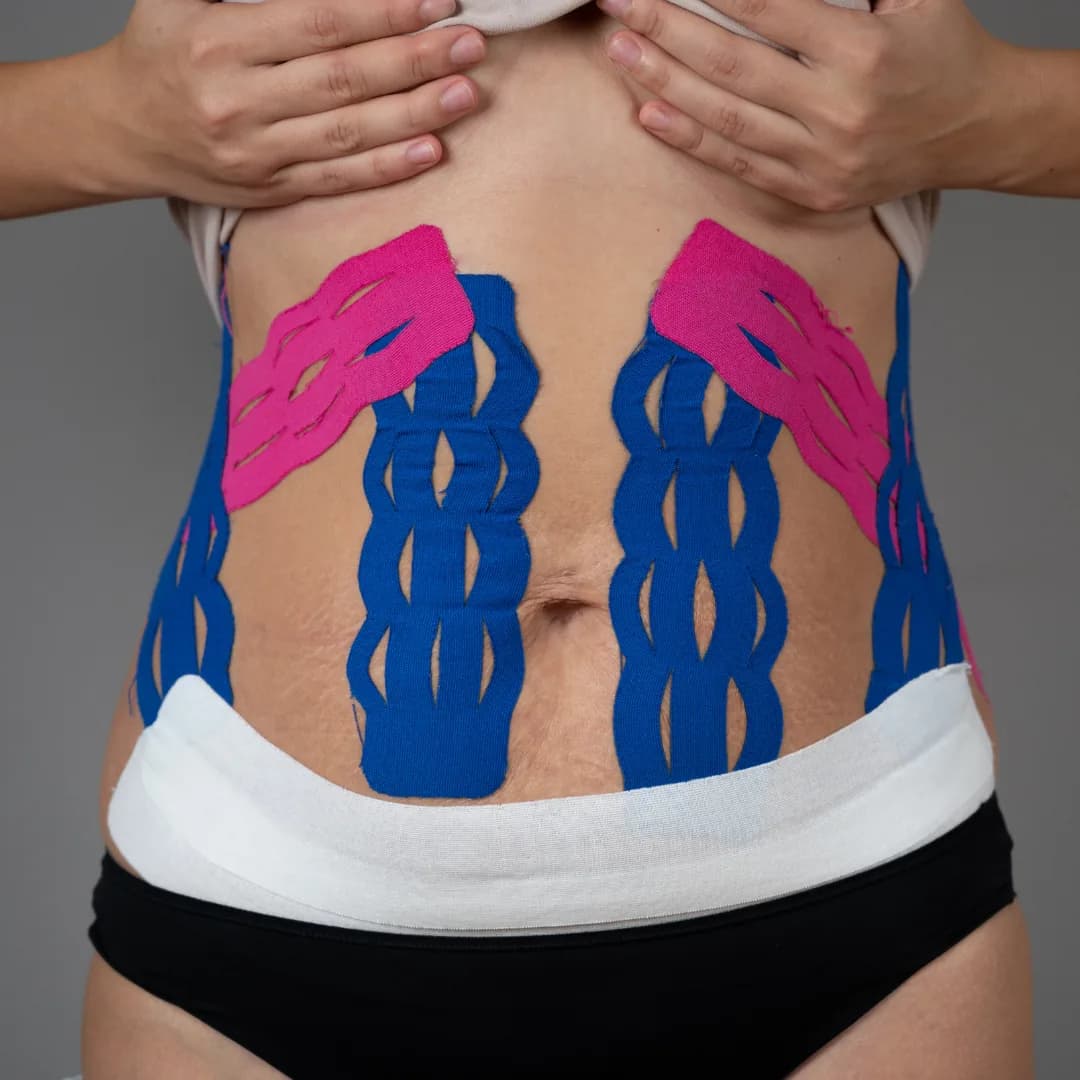
What is it?
Ab Separation after pregnancy (diastasis recti) is the partial or complete separation of the rectus abdominis, or "six-pack" muscles, which meet at the midline of your stomach. Diastasis Recti is very common during and following pregnancy, in fact 90% of women will have some separation from around 35 weeks of pregnancy. This is because the uterus stretches the muscles in the abdomen to accommodate your growing baby.
Over a third of women will have a gap of two finger widths or more. This is nearer to two thirds of women on their second or subsequent pregnancies, especially if it wasn't corrected the first time around.
By 6-8 weeks post-partum, the gap should be around 1-2 fingers widths or less. If there is a persistent gap of 3 finger widths or more, strong core exercises may need to be monitored by the individual on whether they feel strong enough to perform them, however there's no strict rule on exercises to avoid as its very individual.
What causes it?
Excessive pressure on the abdominal muscles causes the connective tissue to stretch and weaken at the mid line (Linea Alba) causing ab separation. Commonly cause by pregnancy but can also be caused by heavy weight lifting or excessive core exercise.
How do I check if I have it?
You can check for Ab Separation by doing what's known as a 'Rec Check'. You can ask a doctor or a Pre & Post Natal Fitness Instructor to check for you or you can check yourself following the instructions below:
- Lie flat on your back with your knees bent and shoulder width apart and your feet flat on the floor.
- Lift up your top and roll down any bottoms that come above your hips so you're exposing your whole stomach. Place two fingers vertically down your stomach, just above your belly button.
- Gently press in and out, to feel between the two halves of the muscles.
- Inhale and slowly lift your head and shoulders off the ground, keeping gentle pressure on your stomach with your fingertips.
- Hold that position and continue to breathe and try to feel the two sides of the stomach muscles, there should be a soft dip in the middle. If you cannot feel it, try curling up a little further.
- Relax and lay your head and shoulders back down. Inhale and repeat. Repeat a few times until you get the hang of what you're feeling for.
- If the gap between the muscles appears to be wider than two fingers width, try again using three fingers.
Please also check out this video for further guidance of how to check.
Are there any symptoms I should be aware of?
Diastasis Recti can give your stomach a dome-like appearance, which sticks out more when your core is engaged. Alongside this, other symptoms which may be present are:
- Lower back pain
- Weak pelvic floor muscles
- Bladder leakage
- Poor posture
- Constipation
These symptoms are also common symptoms of pregnancy, so some women don't even realise they have any ab separation. This is why it is so important to do that Rec Check before starting any exercise programme.
*If you're still unsure and you're presenting these symptoms then it may be worth speaking to a Women's Health Physio to assess.
How to improve it
For a gap of 3 finger widths or more, the following gentle core exercises are recommended:
- Abdominal hollowing
- Pelvic tilting
- Gentle curl ups where only the head and shoulders are lifted to the point before doming occurs.
Its important to remember that these exercises are only a starting point. It's recommended to continue progressing to more advanced movements and load the abdominals more and more to strengthen the area.
What to do if doming occurs
It was previously thought that 'doming' could cause protrusion and make the separation worse, however further research shows its not as simple as this. Stomach doming can be soft or hard and soft doming is generally ok. If you can push that tissue in then its not being stretched too much.
If you notice HARD doming down the midline of your stomach or abdominal bulging (where the whole front wall pops out instead of drawing in) then maybe that exercise is too intense right now and you need to modify or stop.
If hard doming continually occurs even during gentle core exercises and if the ab separation is not improving, I would advise speaking with a qualified Women's Health Physio.
How to prevent it
Although there is no way of preventing Diastasis Recti, having a strong core pre-pregnancy is really important and so is practicing your pelvic floor exercises. Also making sure any core exercise done during pregnancy is done safely and with good form. Avoiding core exercises altogether during pregnancy will only decondition your core which could lead to worse outcomes.
*Most core exercises are safe during pregnancy for MOST people. Everyone is different so listen to your body and recognise your own limitations.
See my Instagram page for some examples of core exercises during pregnancy.
Seek advice from a Pre & Post Natal qualified instructor for more information on the types of exercises you can do pregnancy and for advice on what to do if you have Diastasis Recti or how to help it improve.
All of the workouts at Mama & Me Fitness are adapted to suit pre-natal, post-natal and anyone with ab separation, so you know that you are working out both safely and effectively. For more information, contact me.