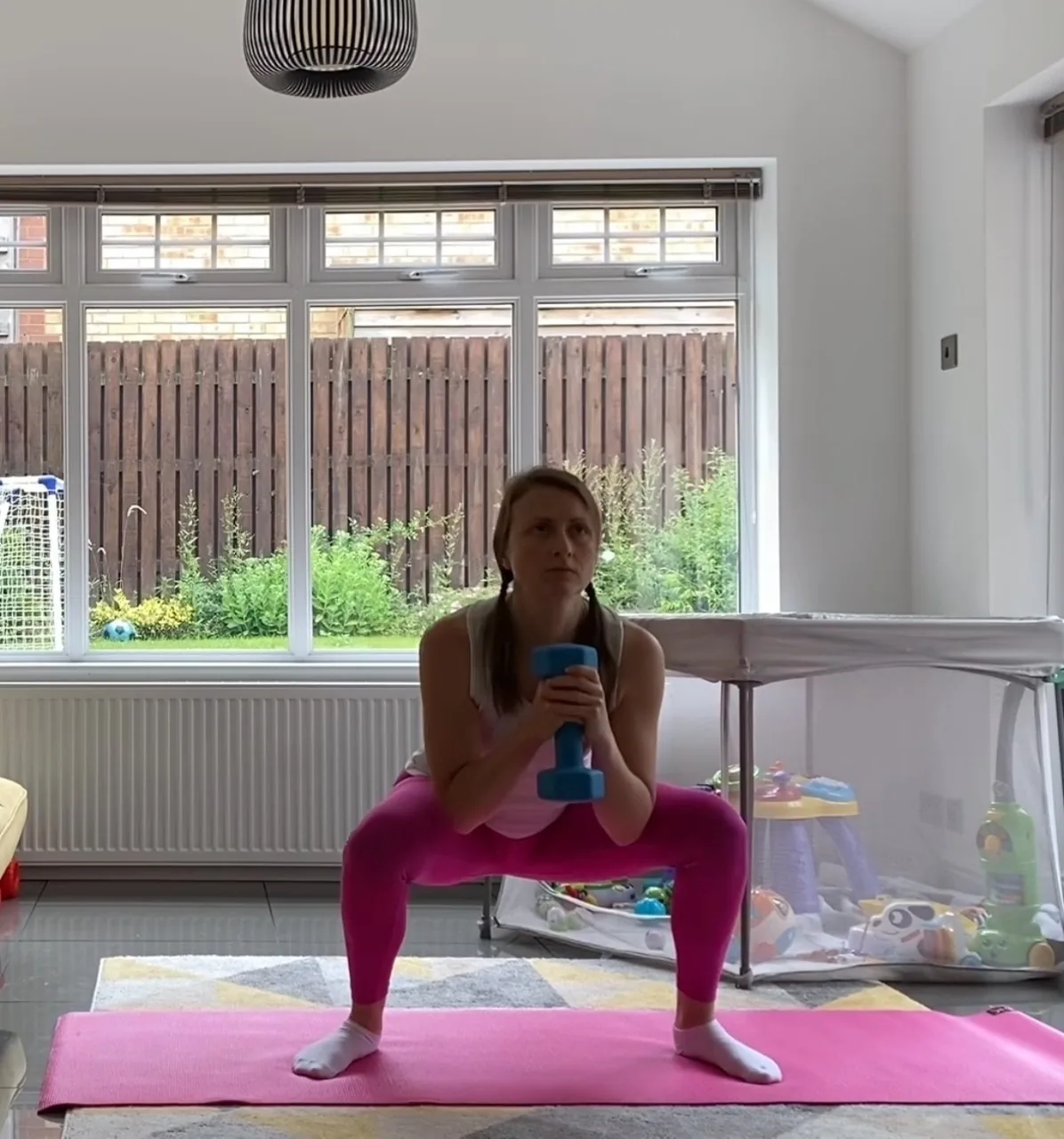
Benefits of strength training
The benefits of strength training are well documented, however many women still don't understand the importance or maybe just don't know where to start. This blog details not just the benefits but also a simple rundown of the basics and how to get started.
There are a plethora of benefits to strength training but here's some of the main ones:
Get stronger – An obvious one, but regular strength training will make you stronger! This will improve your ability to carry out everyday tasks, such as lifting and carrying a baby or toddler and carrying things like heavy shopping and getting prams and car seats from the car to the house.
Improve muscle tone – your muscles will not only get stronger but they will get bigger too, however don't be put off by this – you aren't going to turn into the hulk! Building muscle takes a very long time but you can start to achieve that 'toned' appearance after some consistency.
Burns calories – The more muscle mass you have, the more calories you'll burn at rest. Meaning, not only do you burn calories during weight training but overall having more muscle will mean your body uses more energy.
Improve overall body composition – By combining good nutrition and strength training, you'll reduce your body fat percentage (if needed) and build muscle to achieve a more toned physique. Hours and hours of cardio will never make you toned.
Improves bone density – regular strength training will improve your bone density, reducing the chances of developing conditions such as brittle bones or osteoarthritis in later life – this is VERY important and underestimated, especially for women who, due to hormonal changes in peri/menopause, are at risk of brittle bones as we age. Women lose 10% of bone density every decade after 40 and even more post menopause, however women over 40 who strength trained 3 times per week reduced their overall bone fracture risk by 51%!
Improves confidence – once you have started strength training on a regular basis and start seeing improvements in your strength and your body composition, this will be a huge confidence boost and will make you want to keep improving.
Common misconceptions
Many people, particularly women, who are new to fitness associate weight training with muscular body builders or experienced athletes. This couldn't be further from the truth!
Anyone can take part in weight training; everyone has to start somewhere! Most weight training exercises are functional movements, meaning they contribute to improving your everyday life. For example, squats and deadlifts will help you strengthen the muscles in your lower body required for bending down / lifting / carrying.
Also, many upper body exercises such as rows and chest exercises, are going to strengthen the muscles needed for lifting and carrying your baby / the car seat / the pram etc…
Weight training will not make you 'bulk up'! Women do not have enough of the hormone, testosterone in their bodies to be able to build muscle like men do. Unless you're doing a serious weight training programme of at least 5 days per week of heavy weights / low reps, then you don't need to worry about bulking up (and even then, its VERY difficult to build a lot of muscle, you will not achieve this by accident!)
Most women want to 'tone up', in which case, sticking to between 8-12 sets will achieve 'hypertrophy' and allow your muscles to grow.
If you want to build more strength, then try heavier weights and reduce to 6-10 reps instead.
Can I lift weights when pregnant?
Absolutely! As long as you're cleared to exercise then you're good to go.
Generally, the same exercise principles apply. If you're used to lifting then continue as normal during the first trimester and be prepared to make adjustments to load and intensity as you progress. However, take care with your form and do slow, controlled reps. Also don't lift to failure- stop once you're moderately fatigued (aim for intensity of around 7/10 – no PB's right now!)
If you aren't used to lifting weights then take caution and go for bodyweight workouts whilst you get used to the movement patterns, then gradually introduce weights that you can lift with good form for between 8-15 reps. (you want to be able to hold a conversation rather than going completely flat out)
Avoid lifting heavy weights above your head if you're prone to dizzy spells – switch to a seated position instead of standing for exercises such as shoulder presses if you need to.
If weights are a struggle or you aren't confident, then stick to bodyweight exercises. You'll still get a good workout as there are loads of challenging bodyweight exercises out there. Better still, speak to a qualified Pre Natal PT for guidance (I take on lots of pregnant clients, both online and in person)
For more info about exercise during pregnancy, check out my blog here.
How about post-partum?
Your first port of call is to check in with a pelvic health physio before resuming more intense exercise such as lifting. You can get a referral through your GP or if budget allows, I'd recommend booking a Pelvic Health Physio who carries out 'mummy MOT's – find your nearest physio here.
You should then be fine to strength train from roughly six week post vaginal or ten weeks post c section (most importantly, once YOU feel ready, everyone is different)
Start gradually and build it up, particularly if you're new to strength training.
For more info on post natal exercise, I have a blog post here.
Where do I start?
If strength training feels overwhelming, keep it simple.
You don't need loads of exercises or complicated plans, you just need to move your body in a balanced way.
A great place to start is 2–3 full body workouts per week, each lasting around 30–45 minutes. (although something is ALWAYS better than nothing, so even 15-20mins is effective)
For each workout, aim to include:
- a lower body movement (e.g. squat, lunge, glute bridge)
- an upper body push (e.g. press ups, dumbbell chest press)
- an upper body pull (e.g. rows)
- a core exercise
That's it.
Choose 5–6 exercises total, perform 2–3 sets of 8–12 reps and use a weight that feels challenging but allows you to keep good form.
If you could easily do more than 12 reps, increase the weight.
If you're struggling before 8 reps, reduce it.
If weights feel intimidating, start with bodyweight only – this is still very effective and a great way to build confidence with movement patterns.
Consistency matters far more than perfection. Start where you are, build gradually and remember: you don't have to do everything at once to see results.
All in all, please remember that strength training benefits everyone, of all ages and abilities and it's never too late to start.
If you're new to strength training and you're pregnant or early post-natal then I would recommend seeking advice from a 'Pre & Post Natal Fitness Specialist', to ensure that the advice given is safe and effective for you.
All Mama & Me Fitness programmes incorporate strength / conditioning work, most of which can either be done bodyweight or with weights, either at home or at the gym, so you know you're getting some strength work into your routine which is both safe and effective. For more information, please get in touch.
Already training and wondering how to fuel your workouts effectively? Is it carbs or protein before a workout? Get my FREE guide here.