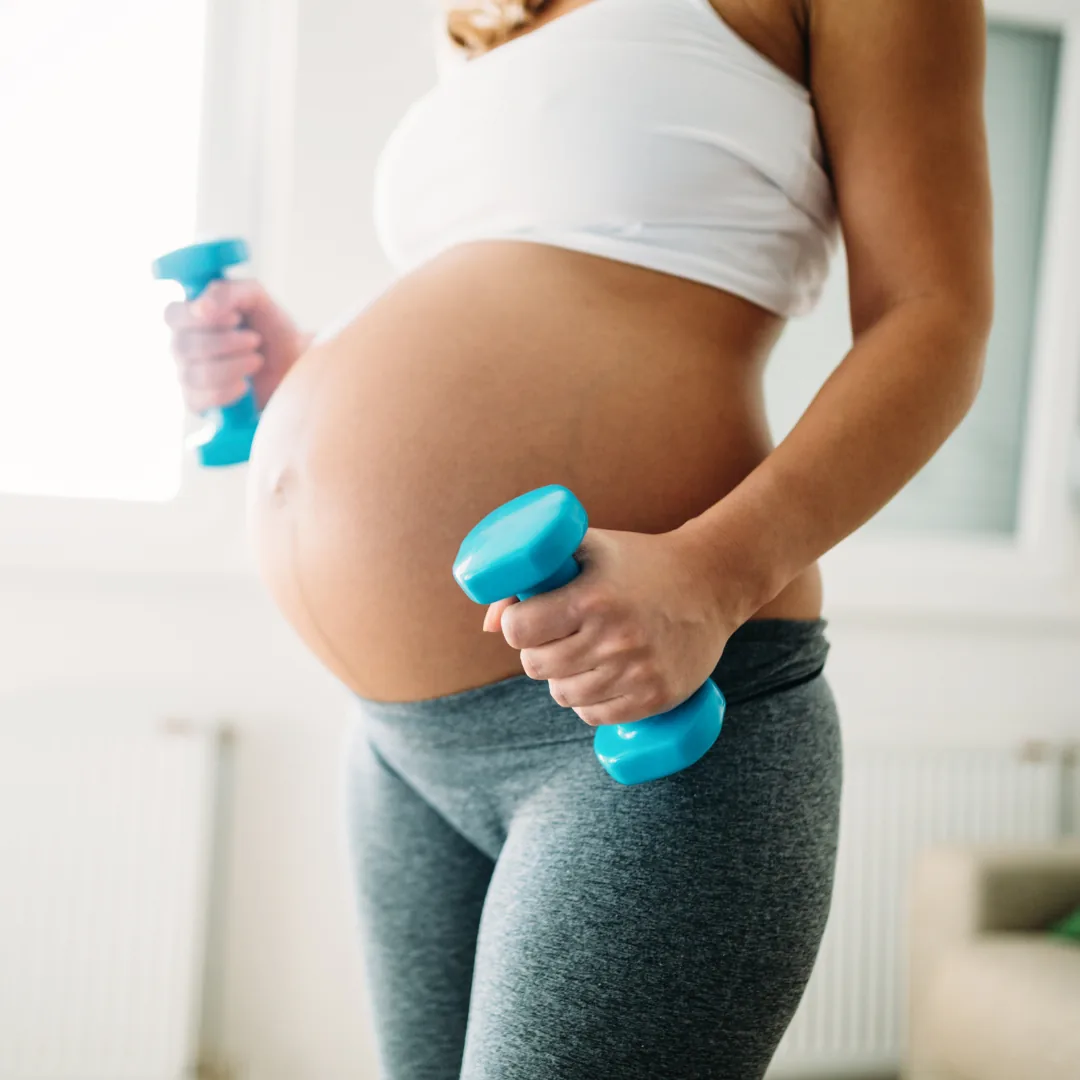
Can I exercise whilst pregnant?
Absolutely! If you have an uncomplicated pregnancy and have GP's clearance to exercise (more on this further down) then you're good to go!
If you're used to exercising then you can more or less continue as normal during the first trimester, however be aware that morning sickness / fatigue may mean you don't really feel like it, and that's ok! During the first trimester, your blood vessels expand in preparation for more blood flow, however the increased blood flow doesn't arrive until the second trimester meaning your blood pressure drops. This is called Vascular Underfill and can cause dizziness and contribute to the feelings of nausea.
If you are feeling good and want to exercise, just listen to your body and make sure you don't overheat or exercise in hot / humid conditions. This is really important as overheating can cause birth defects. Use the talk test: if you can hold a conversation then you're at the right intensity. If you struggle to speak, you're working too hard. Also, gradually reduce the intensity as you move through the trimesters – your body will tell you to slow down anyway!
Remember you are exercising to maintain your fitness levels and feel good. You are not aiming to improve your fitness or achieve PB's.
Take care when switching positions, particularly from laying down to standing – moving too quickly can cause lightheadedness / dizzy spells.
Not used to exercise? Take it slow- this isn't the time to take up strenuous exercise. Start with 15 mins of light to moderate intensity 3 times a week and gradually build up to 30 mins daily. Good options include walking, swimming, indoor cycling or a pregnancy specific exercise class.
If you're going to the gym or attending exercises classes, please make sure your instructor is a Pre & Post Natal qualified instructor, so that you know the class is suitable for you and you're getting the right advice.
Every Mama & Me Fitness plan is suitable for pregnancy from conception to delivery, with plenty of exercise adaptations to suit your stage, so you know you're in good hands. Please get in touch.
Can I train my core?
Contrary to what was previously believed, you CAN still do core training whilst pregnant. In fact, recent studies have shown that exercising the core during pregnancy can reduce the instances of prolonged Diastasis Recti by 35%! (Ab Separation – check out my separate blog post on this)
We now know that you don't need to avoid any kind of abdominal exercises during pregnancy and that actually avoiding them and deconditioning your core can lead to more problems.
If you notice any hard doming in your stomach when doing any kind of core exercise, then it might be too much for you right now and that's your sign to stop or adapt. (This is where your stomach appears to bulge into a cone shape and when you press it, it feels hard. If it feels soft its fine)
Check out my Instagram feed for examples of pregnancy specific core exercises.
Is it true I can lift weights?
Of course! Again, just listen to your body and don't lift too heavy. If you're used to lifting then continue as normal during the first trimester and aim to reduce the weight by 5-10% each trimester. However, take care with your form and do slow, controlled reps.
Don't lift to failure- stop once you're moderately fatigued instead, so if 3 sets of 10 normally has you maxed out for example, reduce the reps / sets or weight accordingly.
If you aren't used to lifting weights then take caution and use light weights and build up gradually.
Avoid lifting heavy weights above your head if you feel dizzy and also be mindful of standing still for too long – switch to a seated position for upper body work if you need to.
If weights are a struggle, then stick to bodyweight exercises. You'll still get a good workout as there are loads of challenging bodyweight exercises out there.
Strength training during pregnancy is highly encouraged – you need to be strong when you're a mama! If you're a beginner or unsure then get the help of a Pre & Post Natal Personal Training to guide you (get in touch for a chat!)
Anything I should avoid?
Avoid contact sports such as boxing, where there is risk of a blow to the stomach or activities with a risk of falling such as horse riding, skiing or cycling (indoor cycling is a great, low impact alternative).
Take care with high impact activities and lots of jumping around. This can put a lot of pressure on your pelvic floor and your stomach muscles (Rectus Abdominis) which are already under pressure from the growing foetus. Also a hormone called 'Relaxin' works to loosen your joints in preparation for birth so this makes you more susceptible to injury. This isn't to say don't do them (I know many pregnant women who continue to run throughout their pregnancies) but if it starts to feel very uncomfortable then listen to your body.
Avoid exercises with lots of twisting and changing direction. This might aggravate round ligament or pelvic pain and also cause dizziness. Also be aware of the growing bump changing your centre of gravity and affecting your balance.
Finally, you might want to take care with exercises lying on your back (supine) after around 16 weeks. It's not advised to lay on your back for long periods (such as sleeping) but during exercise is short to enough to generally be ok if it feels ok, however many mums still find it uncomfortable. You can adapt exercises such as chest press to an incline.
Do I NEED to exercise?
The most important thing to remember is you are growing a human, which is a big deal and very tiring! Listen to your body and get plenty of rest- you're going to need it!
Having said that, exercising when pregnant is extremely beneficial for both mother and baby and is highly recommended. It will also help prevent excessive weight gain and conditions such as Gestational Diabetes, combat fatigue, reduce back pain and help you sleep. Its also great for those niggling aches and pains.
Its also useful to remember that motherhood brings with it a lot of lifting / carrying of a baby / car seat / pram etc…so incorporating some functional strength training into your pregnancy routine will help you to prepare.
The NHS recommends keeping active on a daily basis – 30 minutes of walking each day can be enough.
You should also make sure you do pelvic floor exercises on a daily basis – pregnancy puts a lot of pressure on your pelvic floor and core muscles which can leave lots of women with incontinence / prolapse issues. Don't worry, this can be avoided. Check out my Instagram feed for a post all about Pelvic floor and how to do them.
When you shouldn't exercise
There are several scenarios in pregnancy where exercise is not advised. These are called 'absolute' contraindications. These include (but are not limited to):
- Heart disease
- Incompetent cervix
- Persistent bleeding
- Placenta previa
- Pre-eclampsia
There are also several scenarios where exercise may be possible, however GP advice should be followed as this would be on an individual basis, these are known as 'relative' contraindications. These include:
- Severe Anaemia
- Extreme morbid obesity
- Heavy smoker
- Poorly controlled type 1 diabetes
- Chronic bronchitis
- Multiple gestation
ALWAYS seek advice from your GP before taking part in any form of exercise, the above information is general advice- every pregnancy is different.
If you experience any pain, discomfort, dizziness or excessive fatigue then stop immediately and get advice from your GP. This advice is general and not intended to be medical advice, nor specific to an individual.